Lince Catfish (Platynematichthys notatus)
Lince Catfish
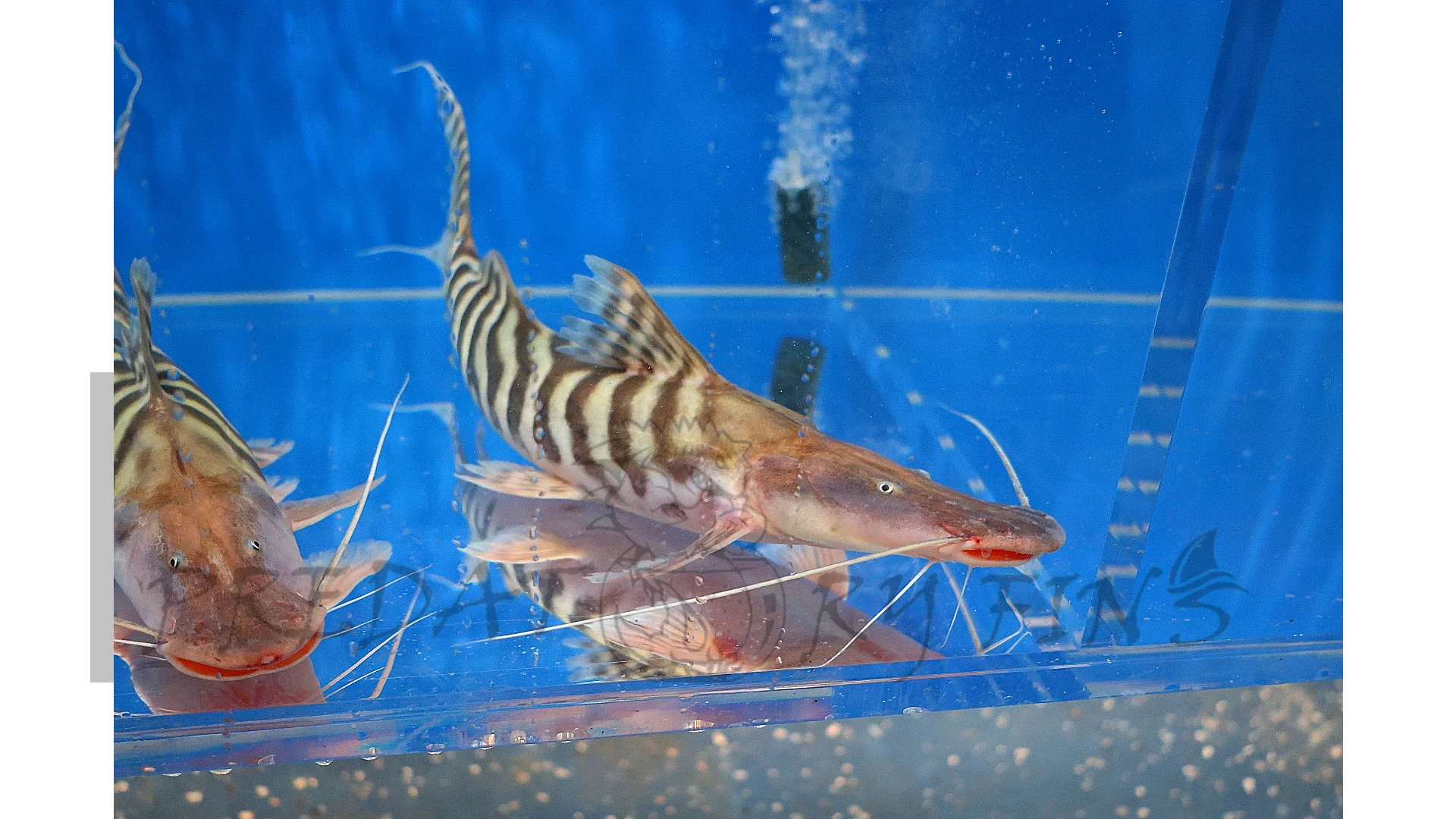
The Lince Catfish is a sleek, predatory freshwater species prized for its striking appearance and active behavior. Known for its elongated body, subtle patterning, and alert personality, this catfish brings both elegance and intensity to large aquariums. Best suited for experienced aquarists, the Lince Catfish thrives in well-maintained environments with plenty of swimming space and secure hiding spots.
Diet
Lince Catfish are carnivorous predators. In captivity, they should be fed a varied diet including:
- High-quality sinking carnivore pellets
- Frozen foods (bloodworms, shrimp, silversides)
- Live foods (feeder fish, worms — use sparingly and responsibly)
A protein-rich diet is essential for proper growth and health.
Tank Requirements
- Minimum Tank Size: 300+ gallons
- Water Type: Freshwater
- Temperature: 75–82°F
- pH: 6.5–7.5
- Setup: Provide lots of swimming room, dim lighting; ensure strong filtration and good water flow
*Ample swimming room is critical, as this species is active and can grow quite large.
Size
- Current Sale Size: Typically 4–8 inches (varies by availability)
Max Size
- Maximum Adult Size: Up to 32" inches
Tank Mates
Due to their predatory nature, tank mates must be chosen carefully:
- Compatible: Larger, robust fish such as datnoids, arowanas, large cichlids, and stingrays
- Avoid: Small fish (will be eaten), slow or delicate species
Always ensure tank mates are too large to be considered prey and can handle similar water conditions.
Original: $595.00
-65%$595.00
$208.25Product Information
Product Information
Shipping & Returns
Shipping & Returns
Description
Lince Catfish
The Lince Catfish is a sleek, predatory freshwater species prized for its striking appearance and active behavior. Known for its elongated body, subtle patterning, and alert personality, this catfish brings both elegance and intensity to large aquariums. Best suited for experienced aquarists, the Lince Catfish thrives in well-maintained environments with plenty of swimming space and secure hiding spots.
Diet
Lince Catfish are carnivorous predators. In captivity, they should be fed a varied diet including:
- High-quality sinking carnivore pellets
- Frozen foods (bloodworms, shrimp, silversides)
- Live foods (feeder fish, worms — use sparingly and responsibly)
A protein-rich diet is essential for proper growth and health.
Tank Requirements
- Minimum Tank Size: 300+ gallons
- Water Type: Freshwater
- Temperature: 75–82°F
- pH: 6.5–7.5
- Setup: Provide lots of swimming room, dim lighting; ensure strong filtration and good water flow
*Ample swimming room is critical, as this species is active and can grow quite large.
Size
- Current Sale Size: Typically 4–8 inches (varies by availability)
Max Size
- Maximum Adult Size: Up to 32" inches
Tank Mates
Due to their predatory nature, tank mates must be chosen carefully:
- Compatible: Larger, robust fish such as datnoids, arowanas, large cichlids, and stingrays
- Avoid: Small fish (will be eaten), slow or delicate species
Always ensure tank mates are too large to be considered prey and can handle similar water conditions.